Key Takeaways
- Low condo fees in Alberta are frequently a warning sign of underfunded reserve funds rather than a reflection of value
- Special assessment history is the most reliable predictor of future costs and financial stress on the building
- Alberta's Condominium Property Act requires reserve fund studies, but many buildings ignore the recommendations to keep monthly fees artificially low
- Professional condo document reviews analyze reserve fund planning, special assessment patterns, and board minutes to reveal hidden financial obligations
- Buildings with clean special assessment histories and higher fees are often safer long-term investments than comparable properties with lower monthly costs
- The 10-day rescission period in Alberta requires fast, expert document analysis before you commit to your purchase
When shopping for a condo in Alberta, a low monthly fee feels like winning the real estate lottery—but a professional condo document review Alberta reveals whether you're looking at a genuine bargain or a financial minefield waiting to explode. Low fees often signal an underfunded reserve fund, deferred maintenance, and a cascade of special assessments that can cost you tens of thousands of dollars after you've already signed the purchase agreement.
Understanding the relationship between condo fees and long-term financial health is critical for homebuyers across Canada, particularly in Alberta's competitive real estate markets in Edmonton, Calgary, Red Deer, and Lethbridge. This comprehensive guide explores the warning signs hidden in Alberta's low-fee buildings and explains how to distinguish between authentic value and financial liability.
Why Low Fees Are Often a Warning Signal in Alberta
The Reserve Fund Trap Explained
Alberta's Condominium Property Act requires condominium corporations to conduct reserve fund studies every five years and maintain adequate funding to cover anticipated major repairs and replacements. However, many boards in Edmonton, Calgary, and throughout the province face pressure—from existing residents and sellers eager to maintain property appeal—to keep monthly fees artificially low, even when their reserve fund studies recommend higher contributions.
This creates a classic financial trap. When monthly condo fees don't align with reserve fund recommendations, the building's reserve account becomes chronically underfunded. Eventually, when a major system fails—a parkade membrane that needs replacement, aging siding requiring work, or HVAC systems reaching end-of-life—the corporation faces a choice: dramatically raise fees or implement a special assessment that forces unit owners to pay thousands of dollars out of pocket.
In Alberta's real estate market, builders and developers sometimes set initial fees below recommended levels to make new condos more attractive to first-time buyers. These low fees become locked into buyers' expectations, making it nearly impossible for boards to increase fees to appropriate levels without triggering owner backlash. By the time you purchase the unit years later, you inherit a building desperately behind on maintenance spending.

How Boards Keep Fees Artificially Low
Professional condo document review services across Alberta reveal a consistent pattern: boards in Edmonton, Calgary, and surrounding areas often delay necessary repairs to avoid fee increases. This strategy makes financial sense in the short term (existing residents keep their low payments) but creates catastrophic consequences for future owners.
Common deferred maintenance issues in Alberta buildings include:
- Parkade membrane systems requiring replacement after 15-20 years
- Exterior siding and caulking vulnerable to Alberta's extreme temperature swings
- Roof systems deteriorating faster than the reserve fund study forecast
- Plumbing and electrical infrastructure in older buildings reaching replacement cycles
- HVAC systems requiring expensive upgrades to meet modern efficiency standards
When boards keep fees low despite these aging systems, they're essentially borrowing from the future—a debt that gets passed directly to you upon purchase. Your "bargain" condo fee masks a building approaching a financial cliff.
The Seller's Incentive Problem
Here's an uncomfortable truth: sellers benefit from low condo fees because they make the property more attractive to buyers. A unit with $300/month fees looks more appealing than the identical unit in a comparable building charging $450/month—even if that higher-fee building has a fully funded reserve and will never face a special assessment, while the low-fee building will face one within three years.
This misalignment of incentives means sellers have no motivation to disclose the financial problems hidden in board minutes or reserve fund studies. Your real estate agent, eager to close the sale, may emphasize the low fees without understanding the building's true financial health. Only a detailed, professional condo document review Alberta reveals these hidden liabilities.
The Correlation Between Low Fees and Special Assessment History
Understanding Special Assessment History as a Red Flag
Special assessment history is the most accurate predictor of a building's financial health and future costs. A special assessment occurs when the condominium corporation requires unit owners to pay additional funds beyond regular monthly fees—typically to address unexpected repairs or shortfalls in the reserve fund.One special assessment in a building's history might represent a legitimate emergency. Multiple special assessments within a 5-10 year period indicate systemic financial mismanagement or chronic underfunding. When you combine multiple special assessments with low monthly fees, you're looking at a building that's been steadily deteriorating while appearing affordable on paper.
Alberta buildings in Edmonton, Calgary, Red Deer, and Lethbridge frequently show this pattern: years of low fees followed by a sudden, dramatic special assessment of $5,000-$25,000 per unit when the board finally acknowledges deferred maintenance. Buyers who didn't review the special assessment history end up absorbing these costs within months of closing.
The Cycle: How Low Fees Lead to Massive Special Assessments
The progression typically unfolds as follows:
Years 1-3: Building is new or recently renovated. Fees are set attractively low to sell units. Reserve fund recommendations are ignored or underfunded. Years 4-8: Initial systems begin aging. Board starts noticing maintenance issues but continues keeping fees low to maintain owner satisfaction and property resale value. Years 8-12: Major systems approach replacement cycles. Reserve fund falls further behind actual needs. Board begins discussing fee increases in meeting minutes but encounters owner resistance. Year 12+: Crisis point. A major system fails or inspection reveals critical safety or structural issues. Board has no choice but to implement a special assessment of $10,000-$50,000+ per unit, often across multiple years.This cycle is playing out in Alberta's condos right now. Buildings that set low fees in 2010-2015 are hitting their crisis point in 2024-2026. If you're buying in Alberta today, you need to know whether you're purchasing in Year 3, Year 8, or Year 12 of this cycle—and our expert review of your Information Statement and reserve fund study reveals exactly where the building stands.
Local Alberta Examples: Parkade Membranes and Siding Issues
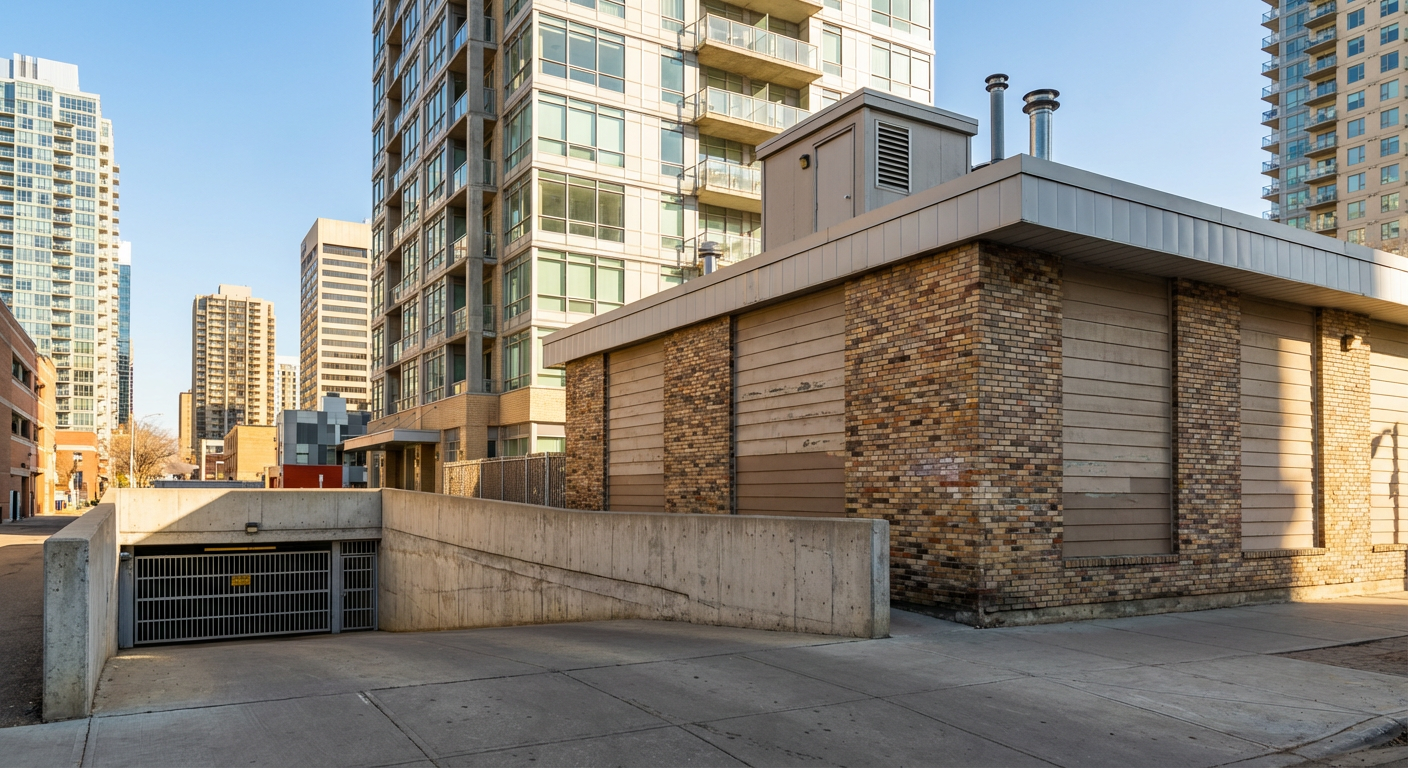
Edmonton and Calgary are particularly vulnerable to parkade membrane failures. These underground structures experience freeze-thaw cycles that degrade waterproofing systems faster than buildings in warmer Canadian provinces. A parkade membrane replacement in a mid-sized Alberta condo typically costs $200,000-$600,000—a bill that gets passed to unit owners through special assessments if not adequately reserved.
Similarly, Alberta's exterior siding experiences extreme stresses from temperature swings (60°C winter-to-summer differentials aren't uncommon). Buildings that deferred siding maintenance for a decade suddenly face $300,000-$800,000 replacement projects. Buyers who didn't review the reserve fund study and special assessment history often discover these obligations after closing.
Red Deer and Lethbridge condos show similar patterns with roof systems, where Alberta's hail season combined with temperature extremes, creates premature aging of roofing materials. A building with low fees and no special assessment history for 10 years is statistically likely to face one within the next 2-3 years.
What to Look for in Your Alberta Condo Document Package
The Information Statement: Alberta's Disclosure Document
In Alberta, the Information Statement (issued by the condo board during the pre-sale phase under the Condominium Property Act) is your primary source of building financial data. When reviewing your purchase, request the Information Statement and examine these critical sections:
- Financial Summary Section: - Current monthly condo fees compared to the previous 3-5 years
- Percentage of units in good standing vs. those with arrears
- Total reserve fund balance and whether it's increasing or decreasing annually
- Projected reserve fund balance for the next 3-5 years
- Assessment History: - Any special assessments levied in the past 10 years
- The stated reason for each special assessment
- How much each special assessment was, and whether it was one-time or multi-year
- Remaining obligations from multi-year assessments
If you see multiple special assessments listed, or if the current fees haven't increased despite board minutes discussing "financial pressures," those are red flags that our Alberta condo document review service identifies immediately.
Board Meeting Minutes: Where the Real Story Lives
Financial statements tell one story; board meeting minutes tell another. Review minutes from the last 12-24 months specifically for:
- Discussions about fee increases or resistance from owners
- Mentions of "deferred maintenance," "underfunded reserve," or "financial pressures"
- Debates about special assessments or "cash calls"
- Vendor proposals for major repairs that the board decided "not yet"
- Comments from board members about reserve fund study recommendations being "too aggressive"
Board minutes often reveal when financial problems are acknowledged but not addressed. For example, a board member noting "our reserve study recommends $500/month but we're only charging $350" is a direct admission of underfunding. Minutes that consistently avoid fee-increase discussions are equally concerning—silence often means the problem is being ignored, not solved.
The Reserve Fund Plan: The Building's Financial Blueprint
Alberta's Condominium Property Act requires a professional reserve fund study every five years. This study includes:
- Detailed inventory of building components and their remaining useful life
- Projected replacement costs for each major system
- Recommended annual reserve fund contribution to meet anticipated expenses
- Funding schedule for the next 30 years
Compare the "recommended contribution" to the actual monthly fees residents pay. If the reserve study recommends $450/month and residents pay $300/month, the building is 33% underfunded. That shortfall is being pushed into the future—and you're likely to inherit it.
Learn more about our condo document review process to understand how professionals analyze these documents to protect your financial interests.
The Estoppel Certificate: Your Financial Snapshot
Alberta's Estoppel Certificate lists:
- Current monthly condo fees
- Unpaid special assessments or owner arrears
- Upcoming special assessments already approved by the board
- Any legal disputes involving the corporation
A building with zero unpaid arrears and no pending special assessments sounds healthy—until you review the reserve fund study and realize a special assessment is coming next year. The Estoppel Certificate represents the building's financial status today, not its financial trajectory.
How Professional Condo Document Reviews Protect Alberta Homebuyers
Expert Analysis Reveals Hidden Financial Risks
Our professional condo document review service goes far beyond reading documents—we analyze the relationships between them to identify financial cliff scenarios specific to Alberta condos. We examine:
- Whether current fees align with reserve fund recommendations
- Patterns in special assessment history and board decision-making
- Whether deferred maintenance is accumulating
- Red flags in board minutes suggesting financial denial or mismanagement
- Comparison of the subject building's financial health against Alberta benchmarks
For a Calgary condo document review, an Edmonton condo document review, or reviews in Red Deer and Lethbridge, our analysis focuses on Alberta-specific issues: parkade longevity, siding durability, HVAC efficiency needs, and the province's typical reserve fund dynamics.
Speed Matters: The 10-Day Rescission Window in Alberta
Alberta law provides a 10-day rescission period after receiving condo documents—a window to review everything and withdraw from the purchase without penalty. That's 240 hours to absorb potentially 500+ pages of financial records, legal documents, and building information.
Get your condo documents reviewed by professionals within 48-72 hours, providing you with a comprehensive report identifying financial risks while the rescission window is still open. This speed matters. If you discover a building faces a $15,000 special assessment within months of closing, a 10-day rescission period is your only escape route—and that window closes quickly.
Building-Specific Insights for Alberta Markets
Different Alberta markets show different patterns. Edmonton's older downtown and mature neighborhoods often feature buildings where low fees masked decades of deferred maintenance. Calgary's newer southwest communities include buildings where developer-set fees were unrealistically low. Red Deer and smaller Alberta communities show less transparent reserve fund practices overall.
Our Alberta condo document review expertise includes understanding these regional patterns and what they mean for your specific purchase. A low fee might be genuinely concerning in Edmonton's mature condo market but potentially less problematic in a newer Calgary development—context matters, and professional condo analysis provides it.
Bargain vs. Warning Signs: Your Alberta Condo Checklist
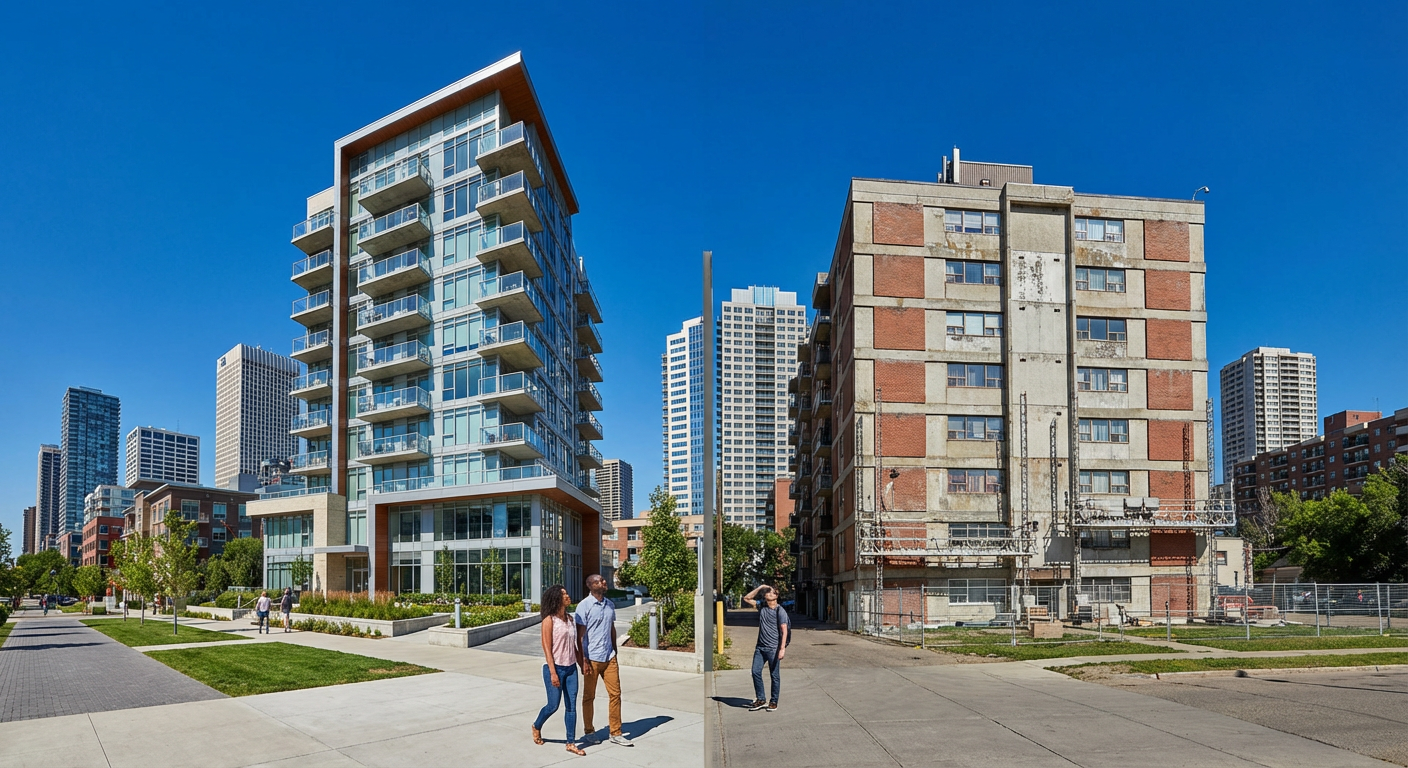
Signs of a Genuine Bargain
Not all low fees are warning signs. Here's when lower condo fees might actually represent good value:
- Newer building (less than 10 years old) with proportionally lower maintenance needs
- Fully funded reserve according to the professional reserve fund study
- Clean special assessment history with zero special assessments in the past 10+ years
- Board minutes showing proactive maintenance and planned system replacements
- Monthly fees increasing gradually 2-3% annually in line with inflation
- High occupancy rate (90%+ owner-occupied) with strong owner satisfaction
- Professional management and transparent financial reporting to residents
A building in Calgary or Edmonton where the board proactively replaced the parkade membrane 3 years ago (reflected in reserve fund discussions) might have lower fees because major expenses have been addressed recently, creating a temporary dip in required funding. That's genuinely lower risk.
Red Flags: When Low Fees Mean Warning
Conversely, low condo fees combined with any of these factors suggest serious financial risk:
- Multiple special assessments in the past 5-10 years
- Reserve fund study recommending significantly higher fees than residents actually pay
- Board minutes with repeated discussions of "financial pressures" or fee-increase rejections
- Aging building components (15+ year-old systems) with no mention of planned replacements
- Low reserve fund balance relative to the building's size and age
- Increasing owner arrears or delinquent payments
- High turnover with many units on the market (suggests owners are fleeing)
- Pending litigation or disputes involving the condominium corporation
- Absent or vague financial reporting to residents
When low fees appear alongside multiple red flags, you're looking at a building approaching a financial crisis. The "bargain" you're getting is really a debt you're inheriting.
Comprehensive Checklist: What Alberta Buyers Must Review
Before proceeding with any Alberta condo purchase, verify these specific items:
- Reserve Fund and Financial Health: - Reserve fund study completed within last 5 years? (Required by Alberta law)
- Current reserve fund balance as a percentage of annual operating costs?
- Does monthly fee align with reserve fund study recommendations?
- What is the 5-year financial projection for the building?
- Special Assessment History: - Any special assessments in past 5 years? (If yes, how many and for what amounts?)
- Any special assessments currently approved but not yet collected?
- Any legal disputes or pending special assessments mentioned in board minutes?
- Building Systems and Maintenance: - Age of major components: parkade membrane, roof, siding, HVAC, plumbing, electrical?
- When was the last professional inspection of major systems?
- Are any system replacements planned in the next 5 years?
- Board discussions about deferred maintenance in recent minutes?
- Governance and Management: - Is the building professionally managed or self-managed?
- How transparent is financial reporting to residents?
- Has there been significant board turnover recently?
- Do board minutes show proactive decision-making or reactive crisis management?
- Owner Satisfaction and Market Indicators: - What percentage of units are owner-occupied vs. rentals?
- Are many units currently on the market?
- What are owner arrears and delinquency rates?
- Do social media or online reviews suggest owner dissatisfaction?
This comprehensive review is exactly what our expert condo document analysis provides for Alberta homebuyers. We assess each factor and identify which ones represent genuine risk vs. normal variance.
Real-World Alberta Scenario: How Low Fees Became a $20,000 Special Assessment
Consider this actual scenario from an Edmonton condo purchased in 2022:
Initial Attractiveness: A 6-year-old downtown Edmonton building with $320/month fees. The listing agent emphasized the "incredibly low fees for a downtown location." Reserve fund study on file recommended $480/month funding. What the Buyer Missed: Board minutes from the past 3 years showed repeated discussions about parkade membrane inspection concerns. The reserve fund had been frozen at $50,000 despite a 40-unit building—critically underfunded for planned system replacements. The Crisis: Two years post-purchase, the parkade membrane failed inspection. The building required immediate replacement at $300,000. With insufficient reserve, the board implemented a special assessment of $7,500 per unit, due immediately. An additional $500/month temporary fee increase was added for 36 months. The Real Cost: That buyer who saved $160/month on fees ended up paying $20,000+ in special assessments and additional fees within two years—completely negating the "savings" and then some.This scenario repeats across Alberta's real estate markets constantly. Professional condo document review services identify these patterns before you commit to the purchase.
Questions to Ask During Your Document Review
When examining your Information Statement, reserve fund study, and board minutes, specifically ask:
- Why are the recommended fees higher than actual fees? (If yes, why hasn't the board aligned them?)
- What major building systems will need replacement in the next 5-10 years? (Are they adequately reserved for?)
- Has the building undergone any special assessments? (How many and how recently?)
- What was the board's stated reason for not implementing fee increases despite recommendations? (Resistance or financial oversight?)
- Are there any deferred maintenance items mentioned in recent minutes? (Items pushed back to "next year"?)
- What is the average age of the reserve fund study? (Should be recent to be relevant.)
- How do this building's fees compare to similar buildings in the same neighborhood? (Significantly lower might indicate underfunding.)

Beyond the Documents: Red Flags in Your Personal Inspection
While professional document review identifies financial risks, your physical inspection should reveal maintenance-related warning signs:
- Parking area: Is the parkade showing signs of deterioration, water stains, or concrete spalling? This suggests membrane issues coming.
- Exterior: Does the siding or caulking appear well-maintained, or are there visible gaps, cracks, and weathering? Alberta weather accelerates aging.
- Common areas: Are hallways, lobbies, and shared spaces clean and well-maintained? Deferred maintenance often shows here first.
- Roof: From street level, does the roof appear intact? Missing shingles or visible patching suggest aging.
- HVAC equipment: In mechanical rooms, are HVAC units modern or ancient-looking?
- Plumbing: Do faucets work properly and are there water stains suggesting leaks?
These physical observations, combined with your document review, create a complete picture of the building's true condition.
Understanding Alberta's Condominium Property Act and Your Protections
The Alberta Condominium Property Act provides specific protections for buyers, but only if you're aware of them:
- Mandatory reserve fund studies (every 5 years minimum)
- Disclosure requirements for special assessments and financial condition
- Rescission rights (10 days after receiving documents)
- Prohibition against undisclosed special assessments
However, these legal protections only work if you understand what documents you're entitled to receive and what red flags to look for. Many buyers receive their Estoppel Certificate and Information Statement but never review them carefully—or don't know how to interpret what they're reading.
That's where professional Alberta condo document review becomes essential. We translate legal documents into clear English, identify compliance issues, and flag financial risks before you're committed to the purchase.
Key Takeaway: Financial Health Trumps Monthly Cost
The most important lesson for Alberta condo buyers is this: the lowest monthly fee is rarely the best long-term value. A building with $350/month fees and a fully funded reserve fund, clean special assessment history, and proactive maintenance is vastly superior to a building with $250/month fees, chronic underfunding, and recurring special assessments.
Think of condo fees as your building's maintenance investment plan. Fees that appear artificially low are simply costs that have been deferred—pushed from the present into your future. When major systems fail or accumulated maintenance becomes unavoidable, that deferred cost comes due all at once, typically as a painful special assessment.
Alberta's real estate market is competitive, and low fees make properties appear more attractive during the shopping phase. But emotional attachment to a "great deal" on monthly costs can lead to catastrophic financial decisions. The true value of a condo rests on its long-term affordability including reserve fund adequacy and special assessment risk.
Professional condo document review Alberta services exist to answer one critical question: Is this low fee a bargain or a warning? Before you sign any purchase agreement in Edmonton, Calgary, Red Deer, Lethbridge, or anywhere else in Alberta, ensure you know the answer.
Visit our condo document review page to get started with a comprehensive analysis of your Alberta condo documents, or jump directly to Start Your Review to order your professional assessment today.
Condo Document Reviews Across Canada
We provide professional condo document reviews for homebuyers across all Canadian provinces (excluding Quebec):
- Central: Ontario Status Certificate Review
- Western: Alberta Condo Document Review, BC Strata Document Review
- Prairies: Manitoba, Saskatchewan
- Atlantic: Nova Scotia, New Brunswick, Newfoundland & Labrador, PEI
- Northern: Yukon, Northwest Territories
- Specific Alberta Cities: - Calgary condo document review
- Edmonton condo document review
- Red Deer condo document review
- Lethbridge condo document review
Related Resources
Understanding condo financial health is essential for all Canadian homebuyers. These resources provide additional guidance:
- Understanding Reserve Fund Health for Buyers in Canada — Learn how to evaluate whether a building's reserve fund adequately covers anticipated major expenses and future liabilities.
- Questions to Ask Before Buying a Condo in Canada — A comprehensive checklist of due diligence questions that identify financial risks and governance concerns specific to condo ownership.
- What's Included in a Condo Document Review — Detailed breakdown of what professional reviewers analyze when examining your building's disclosure documents, Information Statement, or Estoppel Certificate.
Frequently Asked Questions
What is an Information Statement in Alberta?
An Information Statement is the official disclosure document that Alberta condominium corporations must provide to prospective buyers. It contains the building's financial statements, reserve fund study information, disclosure of special assessments, details about condo fees, and governance documents. It's Alberta's equivalent to Ontario's Status Certificate or BC's Form B Information Certificate. This document is required under the Alberta Condominium Property Act and is your primary source of information about the building's financial health and obligations.
How can I tell if condo fees are too low?
Compare the current monthly fees to the most recent reserve fund study's recommendations. If the recommended fees are 20% or more higher than what residents actually pay, the building is underfunded. Additionally, review special assessment history—if the building has levied multiple special assessments in the past 5-10 years despite having low fees, that's a clear indication that fees aren't covering actual maintenance needs. Finally, benchmark against comparable buildings in the same neighborhood; if your building's fees are 30%+ below similar properties, investigate why.
What should I do if I discover a pending special assessment?
A pending special assessment discovered during your 10-day rescission period is grounds to withdraw from the purchase without penalty in Alberta. Immediately contact your real estate lawyer and request to invoke your rescission rights. If you've already passed the 10-day window, you'll be responsible for the special assessment as the new owner. This is why getting a professional [condo document review](/services/condo-document-review) completed within 48-72 hours of receiving documents is critical—you need time to act within the rescission window.
How accurate are reserve fund studies?
Reserve fund studies conducted by qualified professionals are generally reliable, though they're projections based on current component conditions and market costs. However, the accuracy depends on when the study was completed. A reserve fund study from 2021 may underestimate costs for replacements in 2024-2025 due to inflation and labor cost increases. Additionally, studies assume buildings maintain components properly; buildings that have deferred maintenance may face higher replacement costs than the study projected.
Can a board increase condo fees without owner approval?
In Alberta, boards can generally increase fees within their approved operating budget, but significant increases often require owner approval (specific rules depend on the building's bylaws). However, boards can implement special assessments for unexpected major repairs. Some boards keep regular fees artificially low and plan to fund reserves through special assessments instead—a concerning practice that places unexpected financial burdens on owners. Review your building's bylaws and recent board meeting minutes to understand the fee-increase history and philosophy.
What percentage of reserve funding is considered healthy?
Most experts recommend that condominium reserve funds maintain 50-100% funding compared to fully reserved recommendations (meaning the fund contains 50-100% of what the reserve study says would be needed to address all anticipated repairs over the study period). Buildings operating below 50% funding are considered underfunded and face higher risk of special assessments. However, context matters—newer buildings with fewer aging systems can operate safely at lower reserve percentages than older buildings with aging infrastructure.
Should I avoid buying in any building with special assessment history?
Not necessarily. One special assessment in a building's history might represent a legitimate emergency that was properly handled. What matters is the frequency and context. One special assessment in 20 years of history is quite different from three special assessments in 5 years. Additionally, review *why* the special assessment occurred. A building that faced a special assessment because of a catastrophic, unforeseeable failure (like a major flood) is different from a building that repeatedly faced special assessments because of chronic underfunding. Professional analysis helps distinguish between these scenarios.
What happens if I ignore low condo fees and buy anyway?
You'll inherit the building's financial obligations, which may include imminent special assessments, significantly higher condo fee increases within 1-3 years, or unexpected costs for deferred maintenance. In worst-case scenarios, buyers in underfunded buildings face special assessments exceeding $15,000-$50,000 per unit within 12-24 months of closing. These costs can impact your ability to refinance, damage your equity position, and strain your personal finances. The "savings" from low monthly fees can easily be negated by sudden financial obligations. ---